
A labelling machine is one of those purchases that looks simple until the quotes start arriving. Two machines can carry the same price tag and still behave completely differently on your line. If you run production for a pharma, food, cosmetics or beverage brand, the wrong choice shows up fast as crooked labels, slow changeovers and a line that keeps stopping.
The good news is that most costly mismatches come down to a handful of details. Before you sign off on any bottle sticker labeling machine, work through the seven checks below.
7 Things to Check Before You Buy a Bottle Labeling Machine
1. Match the machine to your bottle shapes
Your containers decide the machine, not the other way around. A round bottle, a flat bottle and a tapered one each need a different labelling approach:
- Round bottles: a wrap-around machine that spins the bottle for full coverage
- Flat and oval bottles: a front-and-back system that applies two labels in one pass
- Tapered or odd shapes: a machine with adjustable guides and pressure to sit the label flush
List every bottle you plan to run now and over the next year, then confirm the machine handles all of them.
2. Production speed and output

3. Semi-automatic or fully automatic
Semi-automatic machines suit lower volumes and tighter budgets, where an operator loads each bottle. Fully automatic systems earn their cost once volume and labor pressure climb. Be honest about where your output is heading before you choose, since outgrowing a machine within a year is a common and expensive mistake.
4. Label type and application method
Sticker, shrink sleeve and wrap-around labels each call for different hardware. A self-adhesive sticker head will not apply a shrink sleeve, and a sleeve system is overkill for a plain product label. Match the machine to the label format your branding actually uses, not just the one that is cheapest to run.
5. Changeover and flexibility
If you run several products or sizes, changeover time quietly decides your daily output. Ask how long it takes to switch formats, whether it needs tools, and how much of the setup the machine remembers. A machine that changes over in minutes pays for itself on a busy line.
6. Placement accuracy and build quality
The whole point of the machine is a clean, straight label every time. Look at how it registers the label, the sensors it uses, and whether it wrinkles or traps air on your specific bottles. A well-built frame holds that accuracy at speed instead of drifting once the line warms up.
A cheap machine that mislabels one bottle in fifty is not cheap. Rejected stock, reprints and rework wipe out the saving.
7. After-sales support and spare parts
A labeling machine is a long-term relationship, not a one-off buy. Before ordering, confirm installation, operator training, spare-part availability and how quickly support can reach you. This is where a local manufacturer with its own service team is worth far more than a distant supplier.
For more on narrowing the field, our guide on how to choose the right labeling machine walks through the same trade-offs by industry.
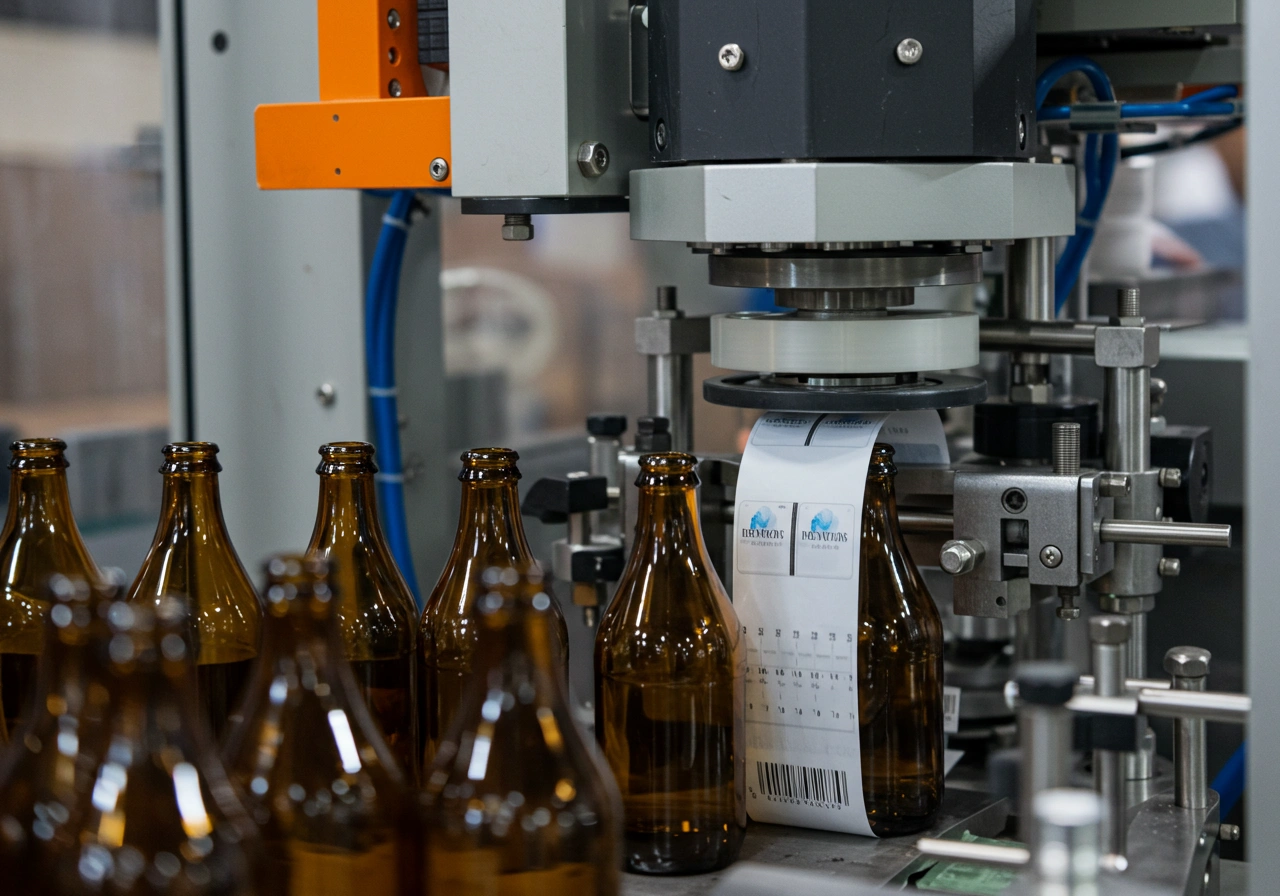
Buy Once, Buy Right
Run these seven checks, and you move from comparing prices to comparing fit, which is the only comparison that matters on a production floor. With more than eight years building labeling machines for pharma, food, cosmetics and beverage lines across India, our team can match a system to your bottles, speeds and budget rather than sell you a spec sheet.
If you are weighing up options, get in touch with our team, and we will help you choose a machine you will not outgrow.