
A labeling machine looks simple from the outside. Bottles go in one end, labeled bottles come out the other. What happens in between is a tightly timed sequence of film movement, sensing and pressure, and once you understand that sequence, most labeling problems on a production line stop feeling mysterious. This guide walks through the working principle, the parts that make it happen, and what actually decides whether your labels land straight.
What a Labeling Machine Is Meant to Do
A labeling machine applies a pre-printed self-adhesive label to a container at a fixed position, at production speed, without human hands guiding each one. Position accuracy matters as much as speed. A label sitting two millimeters low on a pharma bottle can hide a batch code, and a skewed label on a cosmetic pack looks like a quality failure even when the product inside is perfect.
The machine sits near the end of the packaging line, usually after filling and capping. It has to keep pace with whatever comes before it, which is why matching machine speed to line speed is one of the first things we check during installation.
The Working Principle, Step by Step
The core idea is straightforward. The label roll is a continuous liner carrying die-cut labels. The machine pulls that liner around a sharp peel plate. At that sharp angle, the stiff label separates from the flexible liner and pushes forward on its own, while the liner turns back and goes to the rewind spool. Timing that separation to the passing container is the whole job.
Here is the sequence on a running machine:
- Product feeding. The conveyor carries containers at a steady speed. A spacing device, usually a screw feeder, star wheel or simple guide, sets an even gap between them.
- Product detection. A sensor spots the leading edge of the container and sends a trigger to the controller.
- Label dispensing. The drive roller pulls the liner. The label peels off at the plate and moves toward the container.
- Label detection. A gap or label sensor reads the space between labels and stops the liner at exactly the right point, so the next label sits ready at the peel plate.
- Application and pressing. Rollers, brushes or a sponge belt press the label onto the surface as the container moves past, rolling out air and setting the adhesive.
- Liner rewind. The used liner winds onto the rewind spool under controlled tension.
That cycle repeats hundreds of times a minute. Steps 2 and 4 are where accuracy is either won or lost.
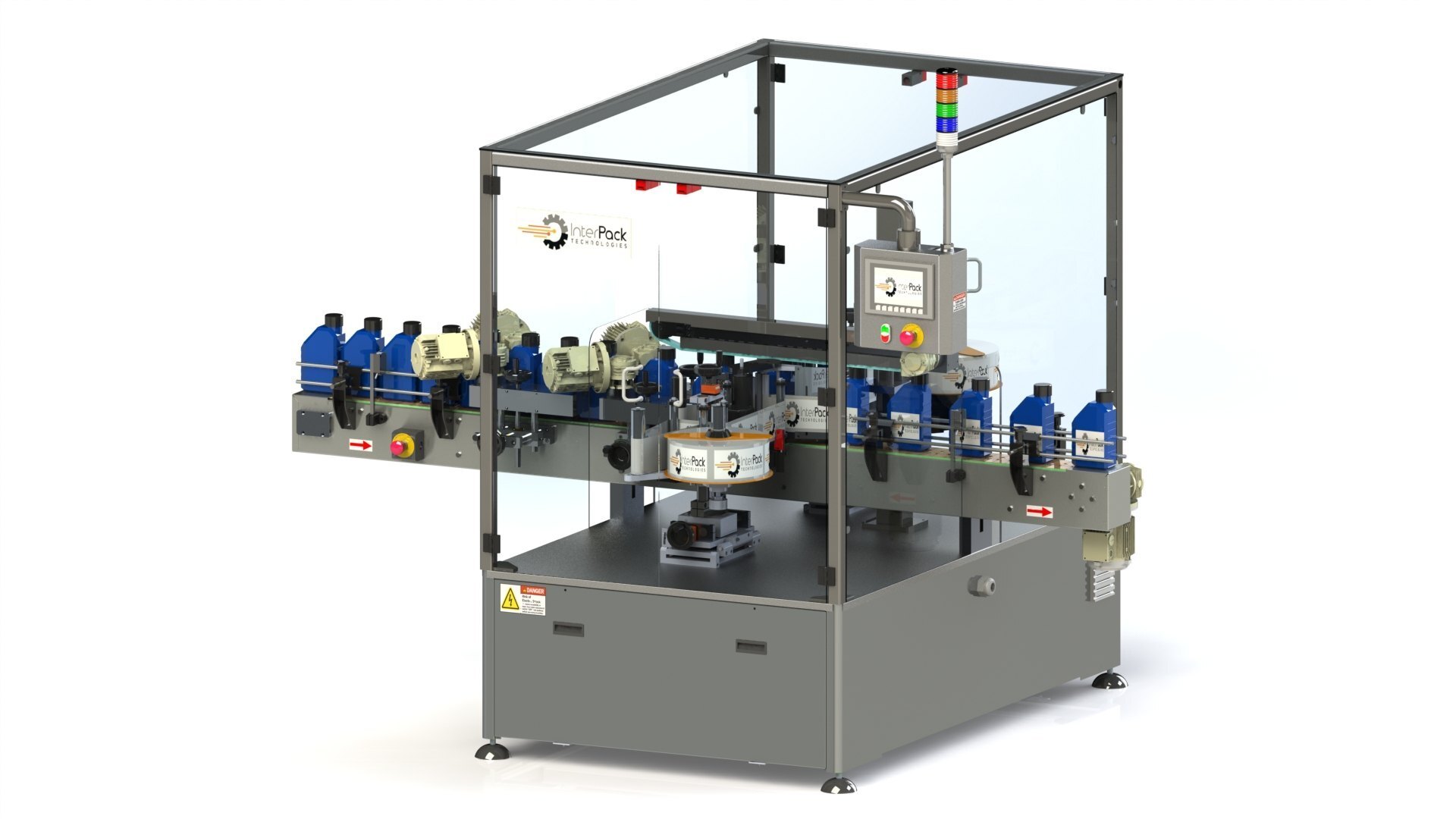
The Main Parts of a Labeling Machine
Unwind and Rewind Assembly
The unwind holds the label roll and feeds it with controlled tension. Too loose and the labels wander, too tight and the liner stretches, which shifts placement gradually through the roll. The rewind collects the spent liner and keeps it out of the way of the moving parts.
Peel Plate and Drive Roller
The peel plate does the mechanical separation, and the drive roller sets how far the liner travels per cycle. On our machines, this pairing is servo controlled so the stop position stays repeatable through long runs and through changes in roll diameter.
Sensors
There are usually two. The product sensor sees the container, and the label sensor sees the gap between labels. Clear labels need a special ultrasonic or transparent-label sensor, since a standard optical sensor cannot see through them reliably.
Applicator and Pressing Station
For a round bottle, a pressing belt or roller spins the bottle so the label wraps evenly. For flat containers, a fixed pressing pad or brush does the work. This is also where wrap-around, front and back, top and bottom, or tamper-evident heads differ from one another, and our full range of automatic labeling machines is built around swapping this section to suit the container.
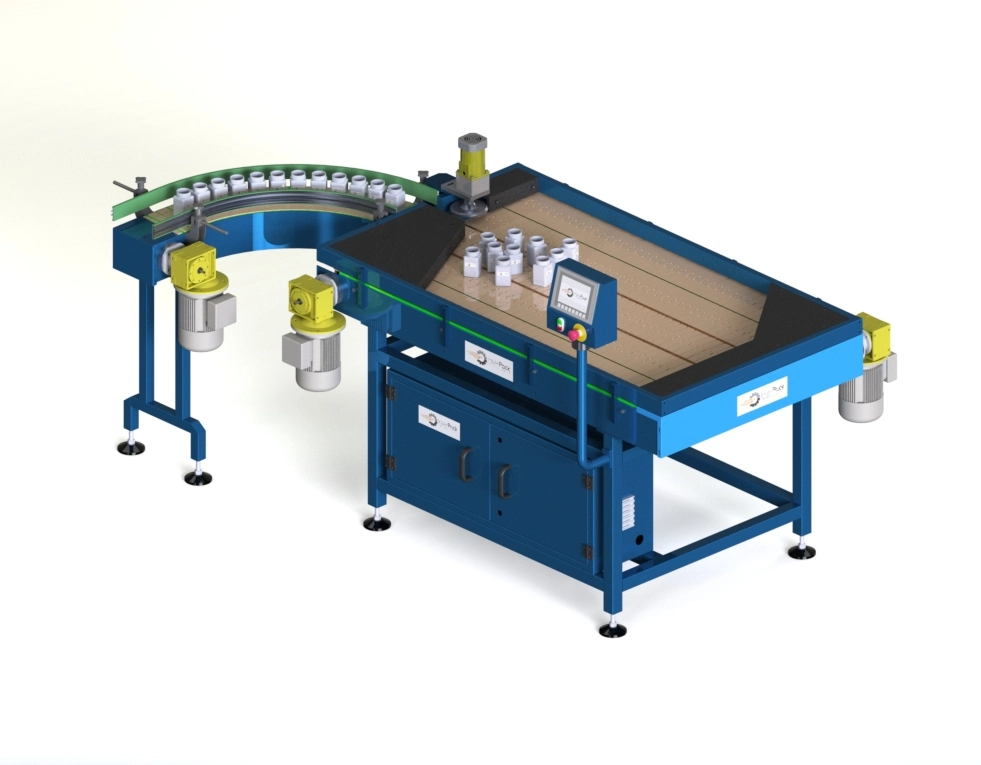
Conveyor and Spacing System
Even gaps between products are what let the controller predict timing. Most placement complaints we trace on customer lines come back to inconsistent spacing rather than a fault in the labeling head itself.
Control Panel
A PLC with an HMI stores the parameters for each product: label length, offset, speed, delay. Recipe storage matters if you run several SKUs, since it turns a twenty minute changeover into a two minute one.
Automatic and Semi-Automatic Machines
A semi-automatic machine needs an operator to place each container in position, then the machine handles the peel and press. It suits small batches, trial runs and startups where volumes are modest.
An automatic machine handles feeding, spacing, detection and application on its own, with only roll changes and monitoring left to the operator. Output moves up sharply, and consistency improves because human placement variation goes away. Most of our customers in pharma, dairy and agrochemicals start semi-automatic and move to automatic once a single shift stops being enough to clear the day’s production.

What Usually Goes Wrong, and Why
Labels lifting at the edges normally point to container shape rather than machine settings. A tapered or waisted bottle simply gives the label less flat area to grip.
Wandering placement across a shift is nearly always tension or a dusty sensor lens. Both take minutes to fix once you know to look there. Skewed labels usually mean the container is rotating slightly before it reaches the press station, so guides and belt pressure need checking.
Labels sticking to the peel plate suggest the peel angle is too shallow, or the adhesive is softening in plant heat. Storing label rolls away from direct heat solves this more often than any machine adjustment does.
Get the Right Machine for Your Line
Understanding the working principle helps, but the right configuration still depends on your container shapes, label sizes and target output. Share your bottle samples and label artwork with our engineering team and we will recommend a machine that fits your line rather than one that oversells it. Contact Interpack Technologies for a quote or a demo at our Vasai facility.