
Choosing a label format looks like a design call. On the factory floor it becomes a machine call, a changeover call, and a cost-per-bottle call. Shrink sleeves and pressure-sensitive labels both do good work, but they suit different container shapes, different batch sizes, and different production lines. This guide breaks down how the two compare so you can match the format to your product before you commit to equipment.
What Pressure-Sensitive Labels Do Well
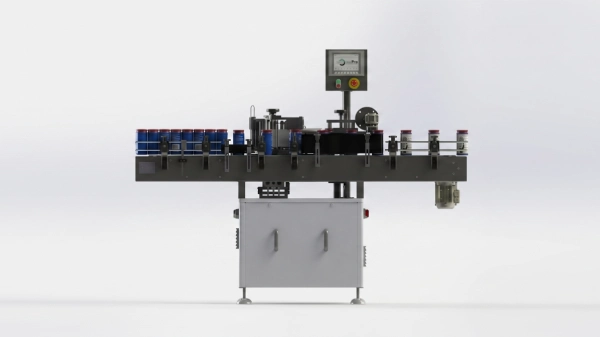
A pressure-sensitive label, also called a self-adhesive or sticker label, is printed on a facestock, die-cut, and carried on a release liner. The applicator peels it off the liner and presses it onto the container. No heat, no solvent, no second station. That simplicity is why sticker labeling still runs on most bottling lines in India.
These labels suit cylindrical, oval, flat and square containers with a usable panel. You can run front and back, wrap-around, or top labeling on the same base platform by changing the head and program. Setup is quick, spares are easy to source locally, and a new operator gets comfortable within a shift or two.
The limits show up on difficult shapes. A sharply tapered bottle or one with a pinched waist tends to lift at the label edges, and wet or chilled environments call for film facestocks and laminates rather than paper.
What Shrink Sleeves Do Well
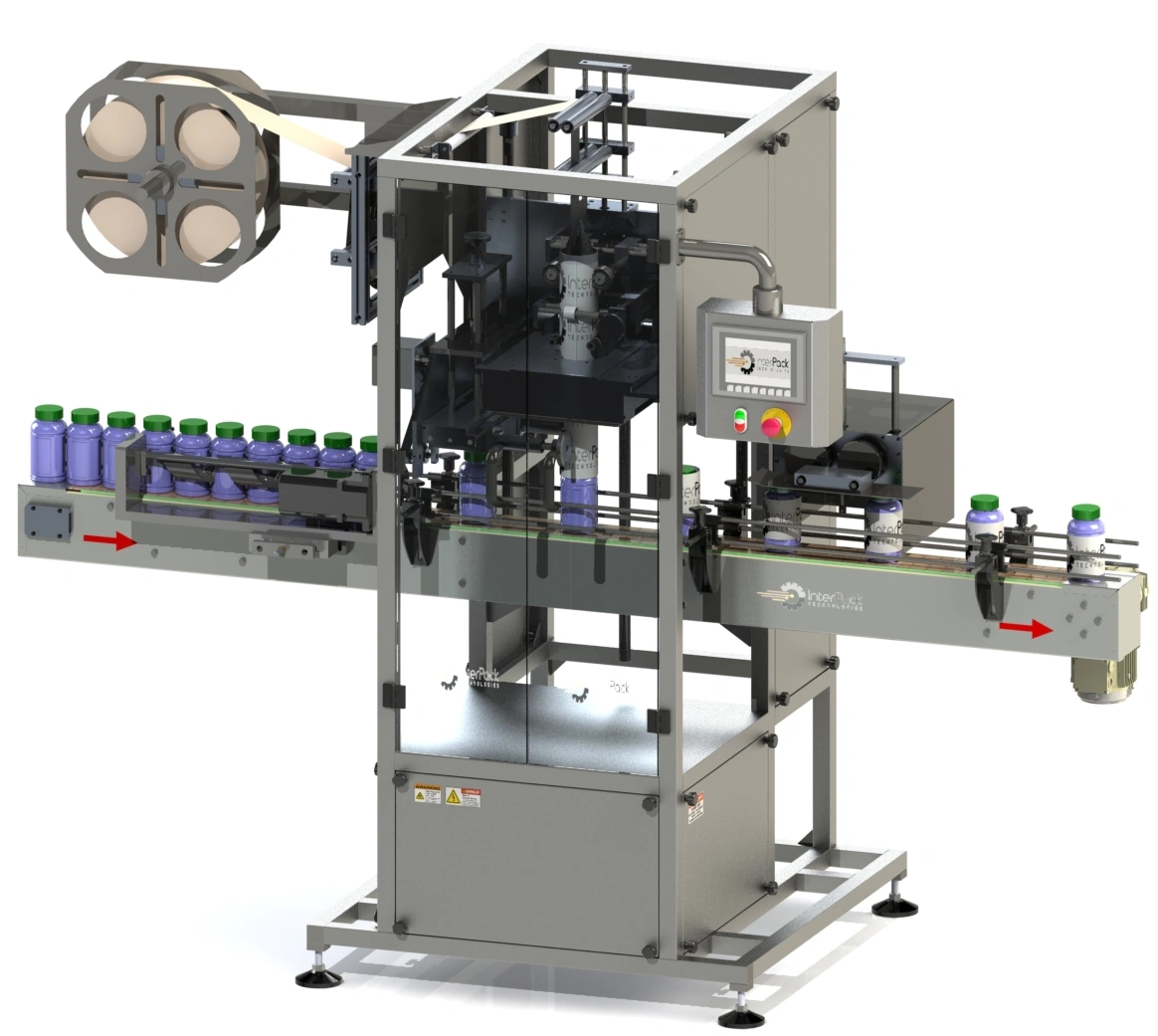
A shrink sleeve is a printed film tube. The applicator drops it over the container and a steam or hot air tunnel shrinks the film until it grips every contour. Because the artwork lives on film rather than on a flat panel, the container can be almost any shape you want.
Sleeves also hand you the full body of the pack as printable area, top to bottom and right around. They seal as they shrink, so a neck sleeve doubles as a tamper-evident band without a separate operation. On a plain generic bottle, a full-body sleeve can carry the entire brand identity, which is why beverage, dairy and personal care brands keep moving toward it. Our shrink sleeve applicator machines run PET, glass and plastic containers in round, oval and irregular shapes, with servo-driven placement for consistent registration.
The trade-off is process complexity. You are adding film tension control, a cutting station and a heat tunnel, which means more variables to tune and more energy consumed per pack.
Where the Two Formats Actually Differ
Container Shape
This is usually the deciding factor. Sticker labels want a stable panel to sit on. Sleeves conform to curves, waists, shoulders and non-round profiles. If your SKU range mixes a straight 500 ml bottle with a contoured 1 liter pack, sleeves let one format cover both.
Branding Area
A wrap-around sticker covers the body but stops short of the shoulder and base. A full-body sleeve uses the whole surface, giving you room for multilingual regulatory text alongside the graphics. For export-facing pharma and food packs, that extra panel space solves a real problem.
Line Speed and Changeover
Sticker labeling lines start faster and change over faster because there is only adhesive and a print head to manage. Sleeve lines hold very steady speeds once tuned, though the tunnel needs to reach temperature before the first good pack comes out. In our experience commissioning both types across India, plants running many short batches usually prefer sticker machines, while single-SKU high-volume lines get more value from sleeves.
Tamper Evidence and Durability
Both formats can be made tamper evident, but sleeves do it more naturally. A shrunk neck band has to be broken to open the pack. Sleeve film also resists condensation, ice buckets and cold-chain handling better than a paper sticker, which matters for beverages and dairy.
Cost per Pack
Sticker labels generally cost less per unit and need less machinery investment upfront. Sleeves cost more per label and per unit of energy, though they can offset that by letting you buy one plain container instead of several decorated ones. Run the numbers over a year of production rather than per label.
Matching the Format to Your Industry
Pharmaceutical lines running vials, ampoules and syrup bottles usually stay with pressure-sensitive labeling, since panels are small, batch codes change constantly, and GMP documentation is already built around the format. Neck sleeves get added where tamper evidence is required.
Beverages, packaged water, dairy and liquor lean toward sleeves for shelf presence and moisture resistance. Cosmetics and personal care split by container: tubes and jars often take stickers, while contoured plastic bottles take sleeves.
Agrochemicals, home care and paints usually need chemical resistance and clear hazard information, so the choice comes down to whether the container is a standard drum or jerry can, which sticker labeling handles well, or an odd-shaped bottle, which favors sleeves. Having built machines for all of these categories, we find the container drawing tells us more than the industry name does.
Questions Worth Answering Before You Buy
Start with your container drawings and your SKU count. How many shapes are you labeling, and how often do artwork or batch details change? Then look at floor space, since a sleeve line with a tunnel needs more of it than a compact sticker labeler.
Next, check your production pattern. Sleeve applicators prefer continuous flow, so intermittent lines need accumulation before the applicator. Finally, look at your team. Sticker machines are easier to hand over to a small maintenance crew, while sleeve lines reward operators who understand heat and film behavior.
Plenty of plants end up running both. A sticker labeler on the pharma line and a sleeve applicator on the beverage line is a common and sensible setup.
Get the Format Right the First Time
Send us your container samples, label artwork and target output, and our team will tell you honestly which format suits your line, including where a simpler machine will serve you better. Contact Interpack Technologies to discuss your labeling requirement or arrange a demo at our Vasai facility.