
A labelling machine is the quiet workhorse of any packaging line. When it runs well, you barely notice it. But the moment labels start going on crooked or the machine stops feeding, your whole production schedule takes a hit. The good news is that most labelling machine problems come from a handful of familiar causes, and nearly all of them can be sorted quickly once you know where to look.
Here are the issues we see most often on the shop floor, and the practical fixes that get your line moving again.
Labels going on crooked or in the wrong position
Skewed, slanted or offset labels are the most common complaint, and usually the easiest to fix. Start with the sensors. Dust, adhesive residue or a slight knock can throw off label detection, so give the sensor a clean and check its calibration. Next, confirm the label roll is loaded correctly and sitting square on the feed path. Even a small misalignment at the reel gets magnified by the time the label reaches the bottle. If the problem keeps coming back, the culprit is often a worn mechanical part or a sensor that has drifted out of calibration.
Bottle labelling machine problems: wrinkling and air bubbles
Wrinkles and trapped air bubbles are frequent bottle labelling machine problems, especially on round and squeezable containers. In our experience, the peel plate angle is the first thing worth checking. If labels wrinkle in the same spot every time, a small adjustment there usually clears it. Application roller pressure matters too. Too little pressure and the label lifts, too much and it bunches. Increase it gradually until the wrinkling stops. Container shape plays a part as well, so make sure the label size actually suits the curve of the bottle you are running.
Labels not sticking or peeling off
Adhesion issues almost always trace back to a mismatch between the label, the adhesive and the surface. Glass, plastic and coated containers each behave differently, so the adhesive has to match the surface it is going onto. Temperature is another hidden factor. Cold bottles coming straight from washing or sterilisation need time to reach room temperature before labelling, otherwise the adhesive never grips properly. If you are running bottles at speed and still seeing peeling, our team can help you match the right bottle sticker labelling machine and label combination to your product, which saves a lot of trial and error down the line.
Sticker labelling machine issues: jams and torn labels
Jams and tearing are the sticker labelling machine issues that cause the most downtime. Low-grade label stock is a common offender, as thin material stretches and tears under tension. Switching to good quality labels with consistent die cuts makes a noticeable difference. Also inspect your rolls for incomplete cuts or adhesive bleed, since labels that do not separate cleanly from the liner will jam the machine. A worn peel plate with a dull edge causes the same trouble, so replace it when the edge stops separating labels sharply.
Humidity is worth mentioning here too. In many Indian production environments, paper labels absorb moisture and swell, which changes their dimensions just enough to cause feeding problems. Storing label stock in a cool, dry place keeps them stable.
Labelling machine not working at all
When you are faced with a labelling machine not working, resist the urge to start pulling parts off straight away. Run through the basics first. Check that the machine is getting power and that the safety guards are properly closed, since many machines will not run with a guard open. Look for a jam in the web path, clean any adhesive build-up off the rollers and sensors, and confirm the label gap sensor is actually detecting the gaps. Nine times out of ten, an unresponsive machine comes down to a sensor fault, a jam or an adhesive-related snag rather than a serious breakdown.
A little maintenance prevents most of it
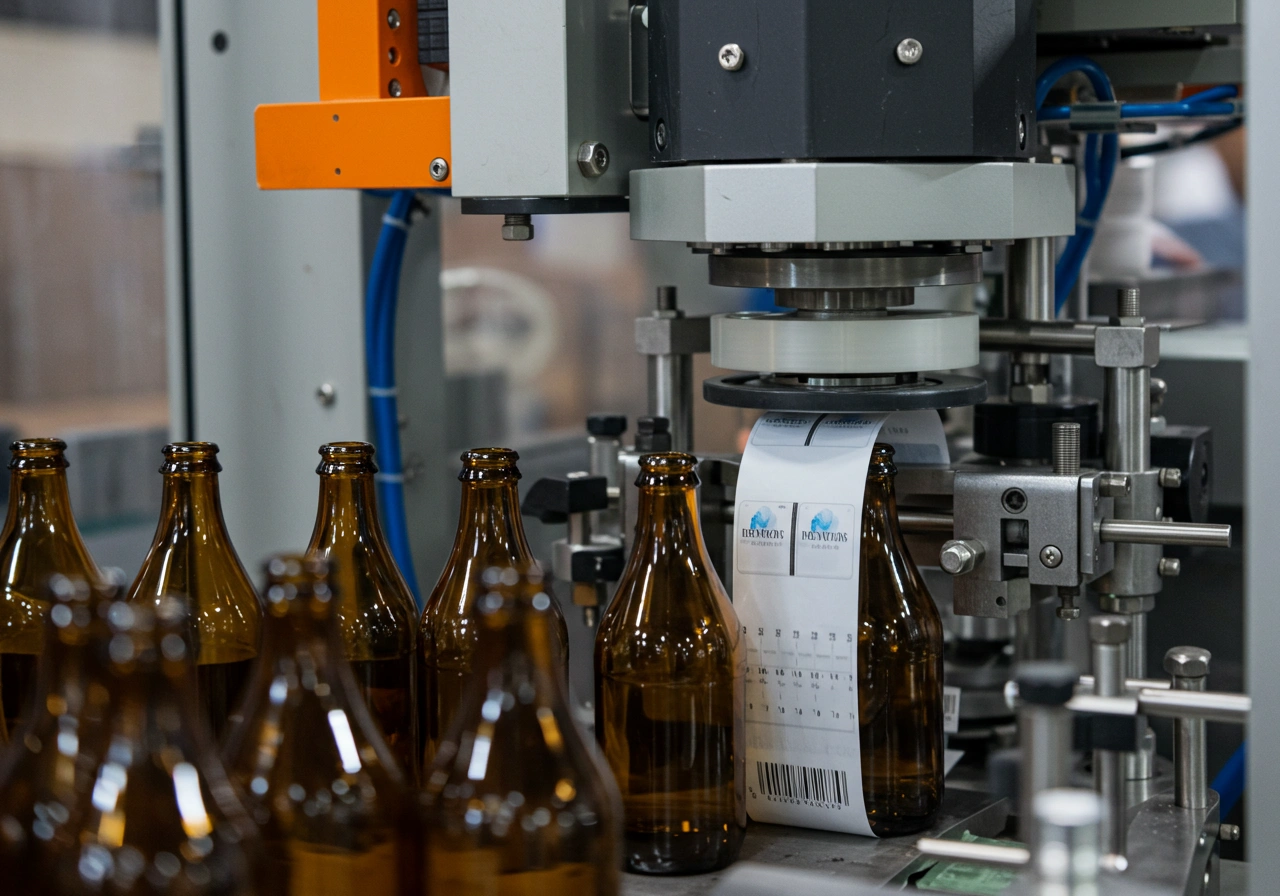
Reactive fixes get you running again, but they do not stop the same problem returning next week. Adhesive slowly builds up on rollers, guides and sensors, attracting dust and degrading performance over time. A simple cleaning routine, set to your production volume, prevents most of the issues above before they ever reach the operator. We always tell our clients that ten minutes of daily cleaning saves hours of unplanned downtime.
When to call in support
Some problems point to worn components or calibration that needs proper tools and experience. If misalignment, jamming or adhesion trouble keeps returning after the basic fixes, it is usually more efficient to have a technician evaluate the machine, recalibrate the sensors and replace any tired parts. Having built and serviced labelling machines for industries like pharmaceuticals, food and cosmetics for over eight years, our team can often spot the root cause quickly and get your line back to full speed.
If your labelling machine is giving you trouble that will not go away, get in touch with Interpack Technologies and our technicians will help you diagnose the issue and keep your production line running smoothly.